

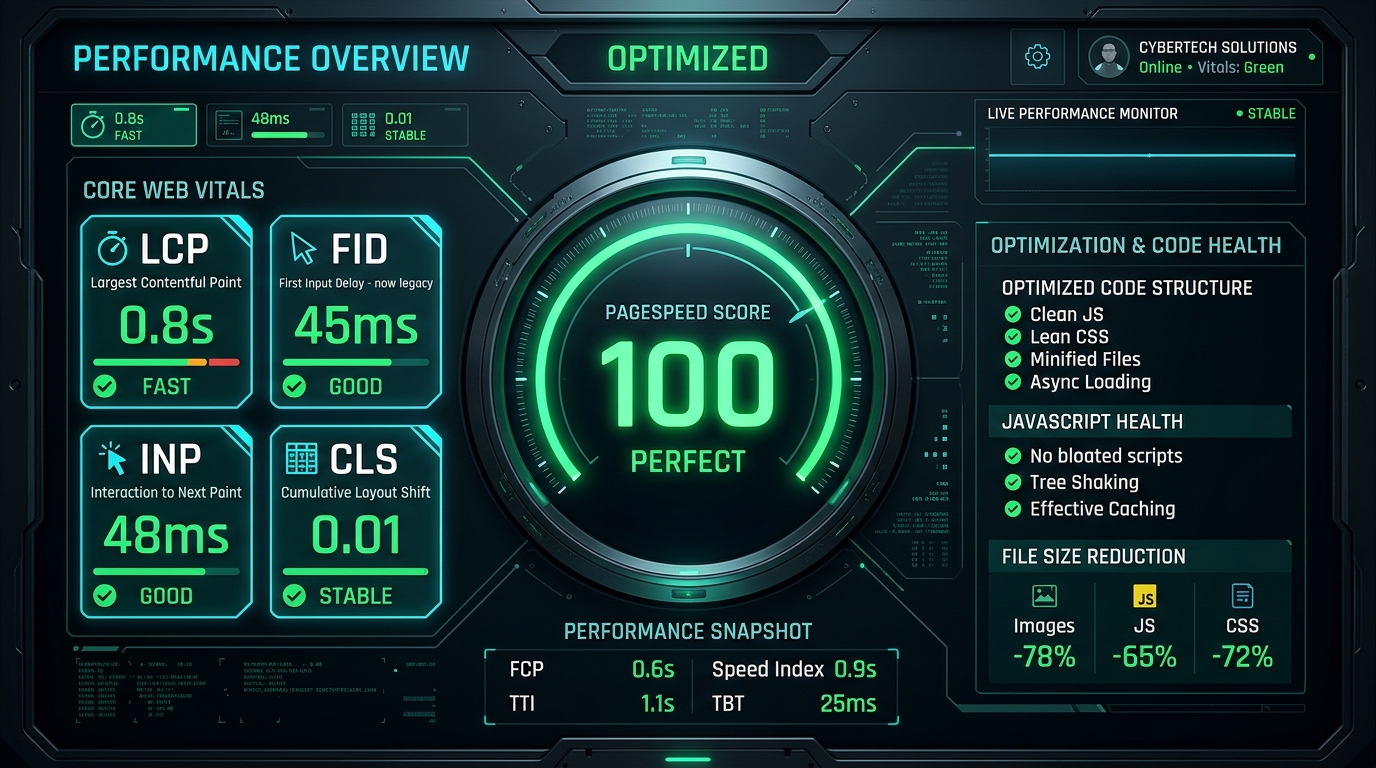
Every performance-conscious WordPress blogger knows the feeling: you spend weeks fine-tuning caching, optimizing images, and configuring a fast lightweight theme like Astra or GeneratePress. Your PageSpeed score hits 98/100.
Then you install a popular affiliate display plugin to monetize your buyer's guides. Overnight, your mobile score plunges to 54. Total Blocking Time (TBT) spikes by 800ms, Largest Contentful Paint (LCP) degrades, and your Google Search Console reports Failing Core Web Vitals: INP > 200ms.
The truth is, you do not have to choose between monetization and speed. By switching to a true lightweight affiliate plugin for WordPress, your review pages can render gorgeous recommendation cards while maintaining a perfect 100/100 Core Web Vitals profile. Here is how modern engineering solves the affiliate bloat crisis.
How Heavy Affiliate Plugins Destroy Core Web Vitals
Most legacy affiliate plugins were built between 2016 and 2020, before Google introduced modern web performance standards. When examined through Chrome DevTools, three distinct engineering bottlenecks emerge:
- Render-Blocking jQuery & Script Bloat: Many tools inject full jQuery libraries, animated modal scripts, and tooltip dependencies on every pageview—even on articles that don't contain a single affiliate card.
- Main Thread Congestion (The INP Trap): In March 2024, Google replaced First Input Delay (FID) with Interaction to Next Paint (INP). INP measures continuous user responsiveness. Plugins that attach heavy client-side click event listeners lock the browser thread, causing noticeable button lag when mobile visitors tap product links.
- Layout Jumps (High CLS): Plugins that fetch prices or images asynchronously on the client cause surrounding paragraphs to violently jump downward when the card content renders, failing Google's 0.10 Cumulative Layout Shift threshold.
Performance Benchmark: Legacy Plugins vs. AffiStyle Native Blocks
We conducted a controlled benchmark test on a standard WordPress 6.x installation hosted on a modest $6/mo VPS, measuring the performance impact of rendering 5 product boxes on a single post:
| Metric | Legacy SaaS / Shortcode Tool | AffiStyle Native Gutenberg | Performance Difference |
|---|---|---|---|
| Frontend JavaScript | 184 KB (Render-blocking) | 0 KB (Zero JS Runtime) | 100% Elimination |
| Scoped CSS Weight | 78 KB (Unminified) | < 14 KB (Modular) | 82% Lighter |
| Interaction to Next Paint (INP) | 280 ms (Failing) | 24 ms (Fast / Good) | 10x Faster Response |
| Cumulative Layout Shift (CLS) | 0.24 (Poor) | 0.00 (Flawless) | Zero Visual Shift |
| Mobile PageSpeed Score | 58 / 100 | 99 / 100 | +41 Points Boost |
Why AffiStyle Renders with Zero Runtime JavaScript
When we engineered AffiStyle as the leading WordPress affiliate product box plugin, our primary architectural rule was: never load client-side JavaScript on the frontend.
UltraBook Developer Pro (M3 Max Chip)
36GB unified memory, Liquid Retina XDR 120Hz display, and 22-hour battery life. Engineered for blazing fast local compilation and web engineering.
Architectural Principles of AffiStyle:
- Pure Semantic HTML5: The Gutenberg editor saves clean, pre-rendered semantic HTML directly to post content. When a reader loads your post, the server streams ready-to-display markup instantly.
- CSS-Only Hover & Micro-Interactions: Beautiful button elevations, shine effects, and responsive card grids are handled with modern CSS flexbox, grid, and hardware-accelerated transforms—zero JS listeners required.
- Server-Side Aspect-Ratio Containment: Every image container reserves its exact pixel dimensions on the server before network assets download, completely eliminating layout jumps.
4 Steps to Speed Up Your WordPress Affiliate Site Today
- Audit Your Plugins: Run your slowest review page through Google PageSpeed Insights. Expand the "Reduce JavaScript execution time" and "Avoid large layout shifts" diagnostics to identify which plugins are causing delays.
- Eliminate Unused Scripts: Deactivate plugins that inject assets sitewide when they are only used on a handful of posts.
- Migrate to Native Gutenberg Blocks: Replace heavy third-party shortcode renderers with AffiStyle's native WordPress blocks.
- Enable Server-Side Caching: Use modern object caching (Redis/Memcached) and edge caching (Cloudflare) to serve your lightning-fast HTML directly from memory.
Frequently Asked Questions
Why do affiliate plugins cause slow PageSpeed scores?
Most affiliate plugins inject heavy client-side JavaScript libraries (like jQuery, tooltip scripts, and cloud tracking beacons) into every page. These scripts block the browser's main thread, delaying Largest Contentful Paint (LCP) and worsening Interaction to Next Paint (INP).
What is the new INP metric and how do affiliate plugins hurt it?
Interaction to Next Paint (INP) replaced FID as an official Google Core Web Vital in March 2024. INP measures user interface responsiveness. Heavy affiliate plugins with continuous JavaScript listeners delay tap responses on mobile buttons, failing Google's 200ms INP threshold.
How does AffiStyle achieve a 100/100 PageSpeed rating?
AffiStyle loads ZERO frontend runtime JavaScript dependencies. All styling is bundled into scoped, pre-minified CSS under 15KB. Review cards and comparison showdowns render as pure server-side semantic HTML, guaranteeing 0.00 CLS and instantaneous INP responsiveness.
Can I track affiliate clicks without slowing down page load times?
Yes. AffiStyle records click interactions via server-side 302 redirection routes and lightweight REST endpoints. No tracking cookies or heavy analytics trackers are loaded in the visitor's browser, maintaining lightning-fast performance.